Buy siqg.com ?
We are moving the project
siqg.com .
Are you interested in purchasing the domain
siqg.com ?
domain@kv-gmbh.de · 0541-91531010
Buy siqg.com ?
What is the Pythagorean theorem and the altitude theorem?
The Pythagorean theorem states that in a right-angled triangle, the square of the length of the hypotenuse (the side opposite the right angle) is equal to the sum of the squares of the lengths of the other two sides. This can be expressed as a^2 + b^2 = c^2, where c is the length of the hypotenuse, and a and b are the lengths of the other two sides. The altitude theorem, also known as the geometric mean theorem, states that in a right-angled triangle, the altitude (the perpendicular line from the right angle to the hypotenuse) is the geometric mean between the two segments of the hypotenuse. This can be expressed as h^2 = p * q, where h is the length of the altitude, and p and q are the lengths of the two segments of the hypotenuse. **
What is the Pythagorean theorem and the cathetus theorem?
The Pythagorean theorem states that in a right-angled triangle, the square of the length of the hypotenuse (the side opposite the right angle) is equal to the sum of the squares of the lengths of the other two sides. In mathematical terms, it can be written as a^2 + b^2 = c^2, where c is the length of the hypotenuse, and a and b are the lengths of the other two sides, called catheti. The cathetus theorem, also known as the converse of the Pythagorean theorem, states that if the square of the length of the longest side of a triangle is equal to the sum of the squares of the lengths of the other two sides, then the triangle is a right-angled triangle. In other words, if a^2 + b^2 = c^2, then the triangle is a right-angled triangle, where c is the longest side (hypotenuse) and a and b are **

Similar search terms for Theorem
Top-Angebote
Products related to Theorem:
-
Sesderma Reti Age 5 Liposomal Serum Anti-Aging Innovation 30mLA facial serum for wrinkles and signs of ageing. Reduces wrinkles and fine lines. Hydrates and strengthens barrier. Restores youthful radiance. 5-Retinoid System: smooths wrinkles, accelerates renewal, and boosts collagen. Biomimetic Peptides: fill expression lines by stimulating collagen synthesis.40,73 £*Shipping: 5,22 £Secure redirect to the provider
-
Innovation: Fourth Edition Board Game by Asmadi Games for 2-4 PlayersInnovation: Fourth Edition is a strategic card game for 2–4 players. Build a civilization through ideas, inventions, and cultural advances by developing technologies and sharing achievements. Each card can provide different benefits depending on how it's used, creating varied strategies and unexpected shifts throughout the game. This edition includes updated artwork and streamlined rules for the expansions, as well as Age 11 cards for each set and the new expansion, The Unseen, which adds further possibilities to the core experience. With hundreds of cards and numerous combinations, every game can unfold differently.20,49 £*Shipping: 3,95 £Secure redirect to the provider
-
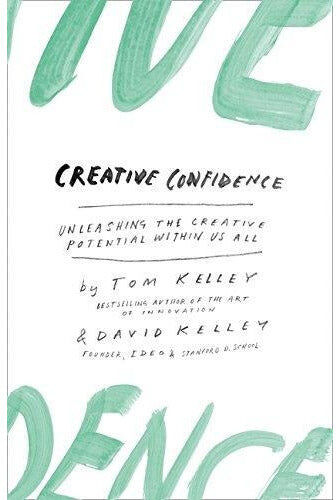
HARPERCOLLINS Creative Confidence by Tom & David Kelley – Unleashing Your Creative Potential & Innovation MindsetA powerful and inspiring book from the founders of IDEO, the award-winning design firm, on unleashing the creativity that lies within each and every one of us. Too often, companies and individuals assume that creativity and innovation are the domain of the ‘creative types’. But two of the foremost experts in innovation, design and creativity on the planet show us that each and every one of us is creative. In an entertaining and inspiring narrative that draws on countless stories from their work at IDEO, and with many of the world's top companies and design firms, David and Tom Kelley identify the principles and strategies that will allow us to tap into our creative potential in our work lives, and in our personal lives, allow us to think outside the box in terms of how we approach and solve problems. ‘Creative Confidence’ is a book that will help each of us be more productive and successful in our lives and in our careers.4,95 £*Shipping: 1,99 £Secure redirect to the provider
-
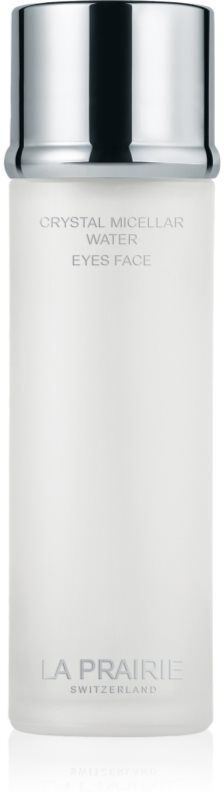
La Prairie Crystal Micellar Water makeup removing micellar water for face and eyes innovation 150 mlLa Prairie Crystal Micellar Water, 150 ml, Micellar Waters for Women, The La PrairieCrystal Micellar Water micellar water is enriched with tiny active particles that bind to any impurities and sebum on contact with the skin. Thanks to these particles, called micelles, this water ensures thorough foundation removal in a few minutes and without the need for pressure or friction on the skin. The micelles are so effective that they can handle even the most stubborn waterproof foundation. Characteristics: cleans pores deeply removes even stubborn makeup keeps skin balanced How to use: Apply enough of the product to a cotton wool pad and wipe gently to remove makeup and clean the skin. Use in the morning and evening or as needed. Shake well before use.125,00 £*Shipping: 3,99 £Secure redirect to the provider


-
How can the altitude theorem and the cathetus theorem be transformed?
The altitude theorem and the cathetus theorem can be transformed by applying them in different geometric shapes and contexts. For example, the altitude theorem, which states that the length of the altitude of a triangle is inversely proportional to the length of the corresponding base, can be applied to various types of triangles and even extended to other polygons. Similarly, the cathetus theorem, which relates the lengths of the two perpendicular sides of a right triangle to the length of the hypotenuse, can be generalized to other right-angled shapes or even applied in three-dimensional geometry. By exploring different scenarios and shapes, these theorems can be adapted and transformed to solve a wide range of geometric problems. **
-
What are the altitude theorem and the cathetus theorem of Euclid?
The altitude theorem of Euclid states that in a right-angled triangle, the square of the length of the altitude drawn to the hypotenuse is equal to the product of the lengths of the two segments of the hypotenuse. This theorem is also known as the geometric mean theorem. The cathetus theorem of Euclid states that in a right-angled triangle, the square of the length of one of the catheti (the sides that form the right angle) is equal to the product of the lengths of the hypotenuse and the segment of the hypotenuse adjacent to that cathetus. This theorem is also known as the Pythagorean theorem. Both the altitude theorem and the cathetus theorem are fundamental principles in the study of geometry and are essential for understanding the properties of right-angled triangles. **
-
What is Thales' theorem?
Thales' theorem states that if A, B, and C are points on a circle where the line AC is a diameter, then the angle at B is a right angle. In other words, if a triangle is inscribed in a circle with one of its sides being the diameter of the circle, then that triangle is a right triangle. Thales' theorem is a fundamental result in geometry and is named after the ancient Greek mathematician Thales of Miletus. **
-
What is the formula for the altitude theorem and the cathetus theorem?
The formula for the altitude theorem is: \( a^2 = x \cdot (x + h) \), where \( a \) is the length of the hypotenuse, \( x \) is the length of one of the legs, and \( h \) is the length of the altitude drawn to the hypotenuse from the right angle. The formula for the cathetus theorem is: \( x \cdot y = h^2 \), where \( x \) and \( y \) are the lengths of the two legs of the right triangle, and \( h \) is the length of the altitude drawn to the hypotenuse from the right angle. **


What is the difference between proportionality theorem 1 and proportionality theorem 2?
Proportionality theorem 1 states that if a line is parallel to one side of a triangle and intersects the other two sides, it divides those sides proportionally. Proportionality theorem 2, on the other hand, states that if a line divides two sides of a triangle proportionally, then it is parallel to the third side of the triangle. In essence, theorem 1 deals with parallel lines and their proportional divisions within a triangle, while theorem 2 deals with proportional divisions and the parallelism of lines within a triangle. **
What is the proof for the altitude theorem and the cathetus theorem?
The altitude theorem states that in a right triangle, the altitude drawn from the right angle to the hypotenuse creates two similar triangles with the original triangle. This can be proven using the properties of similar triangles and the Pythagorean theorem. The cathetus theorem states that the two legs of a right triangle are proportional to the segments of the hypotenuse that they create when an altitude is drawn from the right angle. This can also be proven using the properties of similar triangles and the Pythagorean theorem. **
Top-Angebote
Products related to Theorem:
-
Pro Scooter Tilt Theorem Build (Chiseled) - BlackThe Tilt Theorem Build Stunt Scooter is crafted for riders at intermediate and advanced stages. This stunt scooter is brimming with attributes aimed at elevating your riding skills. Featuring a lightweight and robust aluminium 6000 Series deck, it is ideal for both park and street scenarios. Moreover, it comes fitted with a responsive fork, Tilt SCS compression, and a wheel configuration with a 120mm diameter, showcasing resilient aluminium cores and high-rebound urethane. The Tilt Theorem Build Stunt Scooter is engineered to deliver an optimal riding experience. Its concave deck shape combined with a T-shaped handlebar ensures significant control and comfort. With its elegant design and premium components, the Tilt Theorem Build Stunt Scooter is the optimal selection for those seeking to challenge their boundaries and elevate their riding prowess.319,95 £*Shipping: 0,00 £Secure redirect to the provider
-
Sesderma Reti Age 5 Liposomal Serum Anti-Aging Innovation 30mLA facial serum for wrinkles and signs of ageing. Reduces wrinkles and fine lines. Hydrates and strengthens barrier. Restores youthful radiance. 5-Retinoid System: smooths wrinkles, accelerates renewal, and boosts collagen. Biomimetic Peptides: fill expression lines by stimulating collagen synthesis.40,73 £*Shipping: 5,22 £Secure redirect to the provider
-
Innovation: Fourth Edition Board Game by Asmadi Games for 2-4 PlayersInnovation: Fourth Edition is a strategic card game for 2–4 players. Build a civilization through ideas, inventions, and cultural advances by developing technologies and sharing achievements. Each card can provide different benefits depending on how it's used, creating varied strategies and unexpected shifts throughout the game. This edition includes updated artwork and streamlined rules for the expansions, as well as Age 11 cards for each set and the new expansion, The Unseen, which adds further possibilities to the core experience. With hundreds of cards and numerous combinations, every game can unfold differently.20,49 £*Shipping: 3,95 £Secure redirect to the provider
-
What is the Pythagorean theorem and the altitude theorem?
The Pythagorean theorem states that in a right-angled triangle, the square of the length of the hypotenuse (the side opposite the right angle) is equal to the sum of the squares of the lengths of the other two sides. This can be expressed as a^2 + b^2 = c^2, where c is the length of the hypotenuse, and a and b are the lengths of the other two sides. The altitude theorem, also known as the geometric mean theorem, states that in a right-angled triangle, the altitude (the perpendicular line from the right angle to the hypotenuse) is the geometric mean between the two segments of the hypotenuse. This can be expressed as h^2 = p * q, where h is the length of the altitude, and p and q are the lengths of the two segments of the hypotenuse. **
-
What is the Pythagorean theorem and the cathetus theorem?
The Pythagorean theorem states that in a right-angled triangle, the square of the length of the hypotenuse (the side opposite the right angle) is equal to the sum of the squares of the lengths of the other two sides. In mathematical terms, it can be written as a^2 + b^2 = c^2, where c is the length of the hypotenuse, and a and b are the lengths of the other two sides, called catheti. The cathetus theorem, also known as the converse of the Pythagorean theorem, states that if the square of the length of the longest side of a triangle is equal to the sum of the squares of the lengths of the other two sides, then the triangle is a right-angled triangle. In other words, if a^2 + b^2 = c^2, then the triangle is a right-angled triangle, where c is the longest side (hypotenuse) and a and b are **
-
How can the altitude theorem and the cathetus theorem be transformed?
The altitude theorem and the cathetus theorem can be transformed by applying them in different geometric shapes and contexts. For example, the altitude theorem, which states that the length of the altitude of a triangle is inversely proportional to the length of the corresponding base, can be applied to various types of triangles and even extended to other polygons. Similarly, the cathetus theorem, which relates the lengths of the two perpendicular sides of a right triangle to the length of the hypotenuse, can be generalized to other right-angled shapes or even applied in three-dimensional geometry. By exploring different scenarios and shapes, these theorems can be adapted and transformed to solve a wide range of geometric problems. **
-
What are the altitude theorem and the cathetus theorem of Euclid?
The altitude theorem of Euclid states that in a right-angled triangle, the square of the length of the altitude drawn to the hypotenuse is equal to the product of the lengths of the two segments of the hypotenuse. This theorem is also known as the geometric mean theorem. The cathetus theorem of Euclid states that in a right-angled triangle, the square of the length of one of the catheti (the sides that form the right angle) is equal to the product of the lengths of the hypotenuse and the segment of the hypotenuse adjacent to that cathetus. This theorem is also known as the Pythagorean theorem. Both the altitude theorem and the cathetus theorem are fundamental principles in the study of geometry and are essential for understanding the properties of right-angled triangles. **
Similar search terms for Theorem
-
HARPERCOLLINS Creative Confidence by Tom & David Kelley – Unleashing Your Creative Potential & Innovation MindsetA powerful and inspiring book from the founders of IDEO, the award-winning design firm, on unleashing the creativity that lies within each and every one of us. Too often, companies and individuals assume that creativity and innovation are the domain of the ‘creative types’. But two of the foremost experts in innovation, design and creativity on the planet show us that each and every one of us is creative. In an entertaining and inspiring narrative that draws on countless stories from their work at IDEO, and with many of the world's top companies and design firms, David and Tom Kelley identify the principles and strategies that will allow us to tap into our creative potential in our work lives, and in our personal lives, allow us to think outside the box in terms of how we approach and solve problems. ‘Creative Confidence’ is a book that will help each of us be more productive and successful in our lives and in our careers.4,95 £*Shipping: 1,99 £Secure redirect to the provider
-
La Prairie Crystal Micellar Water makeup removing micellar water for face and eyes innovation 150 mlLa Prairie Crystal Micellar Water, 150 ml, Micellar Waters for Women, The La PrairieCrystal Micellar Water micellar water is enriched with tiny active particles that bind to any impurities and sebum on contact with the skin. Thanks to these particles, called micelles, this water ensures thorough foundation removal in a few minutes and without the need for pressure or friction on the skin. The micelles are so effective that they can handle even the most stubborn waterproof foundation. Characteristics: cleans pores deeply removes even stubborn makeup keeps skin balanced How to use: Apply enough of the product to a cotton wool pad and wipe gently to remove makeup and clean the skin. Use in the morning and evening or as needed. Shake well before use.125,00 £*Shipping: 3,99 £Secure redirect to the provider
-
Farberware Cordless Platinum Stick Vacuum Cleaner, Smart Sensor Technology for Carpet and Hard Floors, Bendable DesignFarberware Cordless Platinum Stick Vacuum Cleaner, Smart Sensor Technology for Carpet and Hard Floors, Bendable Design, Converts to Handheld Vacuum Description: Life is messy, but with Farberware’s Cordless Platinum Stick Vacuum, you can tackle every…155,99 $*Shipping: 0,00 $Secure redirect to the provider
-
HP 280 Silent Wireless Mouse - Blue Optical Technology, 1600 DPI, Ergonomic Design, USB-A Dongle, Black, NewHP 280 Silent Wireless Mouse - Blue Optical Technology, 1600 DPI, Ergonomic Design, USB-A Dongle, Black Overview The HP 280 Silent Wireless Mouse is designed for a quiet and efficient computing experience, making it ideal for both work and home use. Featuring advanced Blue Optical Technology, it delivers precise tracking on various surfaces with a 1600 DPI sensor for smooth and responsive performance. The ergonomic design ensures comfort during extended use, while the wireless connectivity via a USB-A dongle provides reliable and hassle-free operation. With a silent click mechanism, this mouse reduces noise without compromising functionality, offering a seamless and distraction-free experience. Key Features: Silent click technology for a quieter and more comfortable experience Blue Optical Technology for smooth tracking on different surfaces 1600 DPI sensor for accurate and responsive movement Ergonomic design to support comfortable usage for long hours Reliable wireless connectivity via USB-A dongle Compact and lightweight for easy portability Long battery life for extended usage without frequent replacements Product Description The HP 280 Silent Wireless Mouse offers a superior combination of performance, comfort, and convenience. Equipped with Blue Optical Technology, it provides precise tracking on a variety of surfaces, making it suitable for home, office, and travel use. The 1600 DPI sensor ensures smooth and accurate cursor movement, enhancing productivity and efficiency. Designed with an ergonomic shape, this mouse supports natural hand positioning, reducing strain during prolonged use. The silent click feature minimizes noise, making it perfect for quiet environments such as shared workspaces, libraries, and late-night browsing. Wireless connectivity through the USB-A dongle ensures a stable and interference-free connection, eliminating the hassle of tangled wires. With a sleek black finish and a lightweight build, the HP 280 Silent Wireless Mouse is both stylish and portable. Its energy-efficient design offers long battery life, allowing uninterrupted usage without frequent battery changes. Whether for everyday tasks, professional work, or casual browsing, this mouse delivers a comfortable and silent experience. Silent click technology for noise-free operation Blue Optical Technology for enhanced tracking accuracy 1600 DPI sensor for smooth and responsive movement Ergonomic design for all-day comfort Wireless connectivity with a USB-A dongle for reliable performance Compact, lightweight, and easy to carry Long battery life for extended use Stylish black finish, perfect for home, office, or travel The HP 280 Silent Wireless Mouse is the perfect choice for users looking for a silent, precise, and ergonomic mouse that delivers high performance with minimal noise.14,99 £*Shipping: 0,00 £Secure redirect to the provider
-
What is Thales' theorem?
Thales' theorem states that if A, B, and C are points on a circle where the line AC is a diameter, then the angle at B is a right angle. In other words, if a triangle is inscribed in a circle with one of its sides being the diameter of the circle, then that triangle is a right triangle. Thales' theorem is a fundamental result in geometry and is named after the ancient Greek mathematician Thales of Miletus. **
-
What is the formula for the altitude theorem and the cathetus theorem?
The formula for the altitude theorem is: \( a^2 = x \cdot (x + h) \), where \( a \) is the length of the hypotenuse, \( x \) is the length of one of the legs, and \( h \) is the length of the altitude drawn to the hypotenuse from the right angle. The formula for the cathetus theorem is: \( x \cdot y = h^2 \), where \( x \) and \( y \) are the lengths of the two legs of the right triangle, and \( h \) is the length of the altitude drawn to the hypotenuse from the right angle. **
-
What is the difference between proportionality theorem 1 and proportionality theorem 2?
Proportionality theorem 1 states that if a line is parallel to one side of a triangle and intersects the other two sides, it divides those sides proportionally. Proportionality theorem 2, on the other hand, states that if a line divides two sides of a triangle proportionally, then it is parallel to the third side of the triangle. In essence, theorem 1 deals with parallel lines and their proportional divisions within a triangle, while theorem 2 deals with proportional divisions and the parallelism of lines within a triangle. **
-
What is the proof for the altitude theorem and the cathetus theorem?
The altitude theorem states that in a right triangle, the altitude drawn from the right angle to the hypotenuse creates two similar triangles with the original triangle. This can be proven using the properties of similar triangles and the Pythagorean theorem. The cathetus theorem states that the two legs of a right triangle are proportional to the segments of the hypotenuse that they create when an altitude is drawn from the right angle. This can also be proven using the properties of similar triangles and the Pythagorean theorem. **
* All prices are inclusive of VAT and, if applicable, plus shipping costs. The offer information is based on the details provided by the respective shop and is updated through automated processes. Real-time updates do not occur, so deviations can occur in individual cases. ** Note: Parts of this content were created by AI.