Buy siqg.com ?
We are moving the project
siqg.com .
Are you interested in purchasing the domain
siqg.com ?
domain@kv-gmbh.de · 0541-91531010
Buy siqg.com ?
What are the peculiarities of serfdom?
Serfdom was a system of labor in which individuals were bound to the land they worked on and were under the control of a lord. Serfs were not slaves, as they had some rights and could not be bought or sold, but they were still subject to the authority of their lord. They were required to provide labor, goods, and services to the lord in exchange for protection and the use of land. Serfdom was a common feature of feudal societies in medieval Europe and persisted in some regions until the 19th century. **
Will serfdom be reintroduced in the future?
It is highly unlikely that serfdom will be reintroduced in the future. Serfdom was a system of forced labor and servitude that was abolished in most parts of the world during the 19th century. The modern world operates under principles of human rights, freedom, and equality, making the reintroduction of serfdom incompatible with contemporary values and legal frameworks. Additionally, the global economy and labor market have evolved to rely on different forms of employment and compensation, further diminishing the possibility of a return to serfdom. **


Similar search terms for Serfdom
Top-Angebote
Products related to Serfdom:
-
Innovation: Fourth Edition Board Game by Asmadi Games for 2-4 PlayersInnovation: Fourth Edition is a strategic card game for 2–4 players. Build a civilization through ideas, inventions, and cultural advances by developing technologies and sharing achievements. Each card can provide different benefits depending on how it's used, creating varied strategies and unexpected shifts throughout the game. This edition includes updated artwork and streamlined rules for the expansions, as well as Age 11 cards for each set and the new expansion, The Unseen, which adds further possibilities to the core experience. With hundreds of cards and numerous combinations, every game can unfold differently.18,59 £*Shipping: 3,95 £Secure redirect to the provider
-
HARPERCOLLINS Creative Confidence by Tom & David Kelley – Unleashing Your Creative Potential & Innovation MindsetA powerful and inspiring book from the founders of IDEO, the award-winning design firm, on unleashing the creativity that lies within each and every one of us. Too often, companies and individuals assume that creativity and innovation are the domain of the ‘creative types’. But two of the foremost experts in innovation, design and creativity on the planet show us that each and every one of us is creative. In an entertaining and inspiring narrative that draws on countless stories from their work at IDEO, and with many of the world's top companies and design firms, David and Tom Kelley identify the principles and strategies that will allow us to tap into our creative potential in our work lives, and in our personal lives, allow us to think outside the box in terms of how we approach and solve problems. ‘Creative Confidence’ is a book that will help each of us be more productive and successful in our lives and in our careers.4,95 £*Shipping: 1,99 £Secure redirect to the provider
-
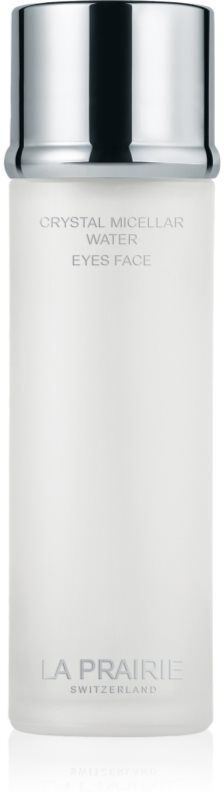
La Prairie Crystal Micellar Water makeup removing micellar water for face and eyes innovation 150 mlLa Prairie Crystal Micellar Water, 150 ml, Micellar Waters for Women, The La PrairieCrystal Micellar Water micellar water is enriched with tiny active particles that bind to any impurities and sebum on contact with the skin. Thanks to these particles, called micelles, this water ensures thorough foundation removal in a few minutes and without the need for pressure or friction on the skin. The micelles are so effective that they can handle even the most stubborn waterproof foundation. Characteristics: cleans pores deeply removes even stubborn makeup keeps skin balanced How to use: Apply enough of the product to a cotton wool pad and wipe gently to remove makeup and clean the skin. Use in the morning and evening or as needed. Shake well before use.125,00 £*Shipping: 3,99 £Secure redirect to the provider
-
Farberware Cordless Platinum Stick Vacuum Cleaner, Smart Sensor Technology for Carpet and Hard Floors, Bendable DesignFarberware Cordless Platinum Stick Vacuum Cleaner, Smart Sensor Technology for Carpet and Hard Floors, Bendable Design, Converts to Handheld Vacuum Description: Life is messy, but with Farberware’s Cordless Platinum Stick Vacuum, you can tackle every…155,99 $*Shipping: 0,00 $Secure redirect to the provider



-
What is the difference between lordship and serfdom?
Lordship refers to the status of a noble or landowner who has control and authority over a piece of land and the people living on it. Serfdom, on the other hand, refers to the status of a peasant or laborer who is bound to the land they work on and must provide labor and goods to the lord in exchange for protection and the right to live on the land. In essence, lordship represents the ruling class with power and authority, while serfdom represents the laboring class with limited rights and freedoms. **
-
What is the difference between serfdom and manorialism?
Serfdom and manorialism are related systems that were prevalent in medieval Europe. Manorialism refers to the economic system where peasants worked on a lord's estate in exchange for protection and the use of land. Serfdom, on the other hand, refers to the legal and social status of the peasants who were bound to the land they worked on and were considered the property of the lord. In essence, manorialism is the economic system, while serfdom is the social and legal status of the peasants within that system. **
-
What is the difference between serfdom and bondage?
Serfdom and bondage are both forms of unfree labor, but they have different historical and cultural contexts. Serfdom was a system of labor in medieval Europe where peasants were bound to the land and required to work for the lord in exchange for protection and the use of land. Bondage, on the other hand, refers to the condition of being enslaved or held as property, often as a result of being captured in war, being born into slavery, or being sold into slavery. While both serfdom and bondage involve the lack of freedom and autonomy, serfdom was tied to the feudal system in Europe, while bondage has been a more widespread and enduring form of unfree labor throughout history. **
-
What is the difference between manorialism and serfdom?
Manorialism refers to the economic system in medieval Europe where land was divided into manors controlled by a lord, who provided protection and resources in exchange for labor and goods from the peasants. Serfdom, on the other hand, was the legal and social status of the peasants who worked the land on the manor. Serfs were bound to the land and could not leave without the lord's permission, whereas manorialism refers to the overall system of land ownership and labor relationships. In essence, manorialism was the economic system, while serfdom was the social status of the laborers within that system. **

Can there be forced labor and serfdom in a democratic state? Justification?
Forced labor and serfdom are generally considered incompatible with the principles of democracy, which prioritize individual freedoms and rights. In a democratic state, citizens are expected to have the right to choose their occupation and work conditions freely. Any form of forced labor or serfdom would violate these fundamental principles and would likely face legal challenges and public outcry. Additionally, international human rights standards and conventions prohibit forced labor and slavery, further reinforcing the incompatibility of these practices with a democratic society. **
What were the serfdom conditions in the Ottobeuren Monastery State in the year 1548?
In 1548, the Ottobeuren Monastery State was a feudal society where serfdom conditions were prevalent. Serfs were bound to the land they worked on and were required to provide labor and goods to the monastery in exchange for protection and a place to live. Serfs had limited rights and freedoms, and their lives were heavily controlled by the monastery. They were subject to the authority of the monastery's rulers and had little opportunity for social mobility. **
Top-Angebote
Products related to Serfdom:
-
HarperCollins Creative Confidence by David Kelley & Tom Kelley - IDEO Design Thinking Guide - Paperback - Business & Innovation Non Fiction BookDevelop your creative potential with this paperback edition of 'Creative Confidence' by David Kelley. The book, published by HarperCollins, argues that creativity is a skill anyone can build, not a rare gift reserved for a few. Drawing on decades of experience helping companies innovate, the authors share practical tools for turning doubt into confident action. This book sets out to demolish the myth that creativity belongs only to 'creative types' and offers real-world advice for anyone looking to boost their creative skills.4,99 £*Shipping: 2,99 £Secure redirect to the provider
-
Sesderma Reti Age 5 Liposomal Serum Anti-Aging Innovation 30mLA facial serum for wrinkles and signs of ageing. Reduces wrinkles and fine lines. Hydrates and strengthens barrier. Restores youthful radiance. 5-Retinoid System: smooths wrinkles, accelerates renewal, and boosts collagen. Biomimetic Peptides: fill expression lines by stimulating collagen synthesis.40,73 £*Shipping: 5,22 £Secure redirect to the provider
-
Innovation: Fourth Edition Board Game by Asmadi Games for 2-4 PlayersInnovation: Fourth Edition is a strategic card game for 2–4 players. Build a civilization through ideas, inventions, and cultural advances by developing technologies and sharing achievements. Each card can provide different benefits depending on how it's used, creating varied strategies and unexpected shifts throughout the game. This edition includes updated artwork and streamlined rules for the expansions, as well as Age 11 cards for each set and the new expansion, The Unseen, which adds further possibilities to the core experience. With hundreds of cards and numerous combinations, every game can unfold differently.18,59 £*Shipping: 3,95 £Secure redirect to the provider
-
HARPERCOLLINS Creative Confidence by Tom & David Kelley – Unleashing Your Creative Potential & Innovation MindsetA powerful and inspiring book from the founders of IDEO, the award-winning design firm, on unleashing the creativity that lies within each and every one of us. Too often, companies and individuals assume that creativity and innovation are the domain of the ‘creative types’. But two of the foremost experts in innovation, design and creativity on the planet show us that each and every one of us is creative. In an entertaining and inspiring narrative that draws on countless stories from their work at IDEO, and with many of the world's top companies and design firms, David and Tom Kelley identify the principles and strategies that will allow us to tap into our creative potential in our work lives, and in our personal lives, allow us to think outside the box in terms of how we approach and solve problems. ‘Creative Confidence’ is a book that will help each of us be more productive and successful in our lives and in our careers.4,95 £*Shipping: 1,99 £Secure redirect to the provider
-
What are the peculiarities of serfdom?
Serfdom was a system of labor in which individuals were bound to the land they worked on and were under the control of a lord. Serfs were not slaves, as they had some rights and could not be bought or sold, but they were still subject to the authority of their lord. They were required to provide labor, goods, and services to the lord in exchange for protection and the use of land. Serfdom was a common feature of feudal societies in medieval Europe and persisted in some regions until the 19th century. **
-
Will serfdom be reintroduced in the future?
It is highly unlikely that serfdom will be reintroduced in the future. Serfdom was a system of forced labor and servitude that was abolished in most parts of the world during the 19th century. The modern world operates under principles of human rights, freedom, and equality, making the reintroduction of serfdom incompatible with contemporary values and legal frameworks. Additionally, the global economy and labor market have evolved to rely on different forms of employment and compensation, further diminishing the possibility of a return to serfdom. **
-
What is the difference between lordship and serfdom?
Lordship refers to the status of a noble or landowner who has control and authority over a piece of land and the people living on it. Serfdom, on the other hand, refers to the status of a peasant or laborer who is bound to the land they work on and must provide labor and goods to the lord in exchange for protection and the right to live on the land. In essence, lordship represents the ruling class with power and authority, while serfdom represents the laboring class with limited rights and freedoms. **
-
What is the difference between serfdom and manorialism?
Serfdom and manorialism are related systems that were prevalent in medieval Europe. Manorialism refers to the economic system where peasants worked on a lord's estate in exchange for protection and the use of land. Serfdom, on the other hand, refers to the legal and social status of the peasants who were bound to the land they worked on and were considered the property of the lord. In essence, manorialism is the economic system, while serfdom is the social and legal status of the peasants within that system. **
Similar search terms for Serfdom
-
La Prairie Crystal Micellar Water makeup removing micellar water for face and eyes innovation 150 mlLa Prairie Crystal Micellar Water, 150 ml, Micellar Waters for Women, The La PrairieCrystal Micellar Water micellar water is enriched with tiny active particles that bind to any impurities and sebum on contact with the skin. Thanks to these particles, called micelles, this water ensures thorough foundation removal in a few minutes and without the need for pressure or friction on the skin. The micelles are so effective that they can handle even the most stubborn waterproof foundation. Characteristics: cleans pores deeply removes even stubborn makeup keeps skin balanced How to use: Apply enough of the product to a cotton wool pad and wipe gently to remove makeup and clean the skin. Use in the morning and evening or as needed. Shake well before use.125,00 £*Shipping: 3,99 £Secure redirect to the provider
-
Farberware Cordless Platinum Stick Vacuum Cleaner, Smart Sensor Technology for Carpet and Hard Floors, Bendable DesignFarberware Cordless Platinum Stick Vacuum Cleaner, Smart Sensor Technology for Carpet and Hard Floors, Bendable Design, Converts to Handheld Vacuum Description: Life is messy, but with Farberware’s Cordless Platinum Stick Vacuum, you can tackle every…155,99 $*Shipping: 0,00 $Secure redirect to the provider
-
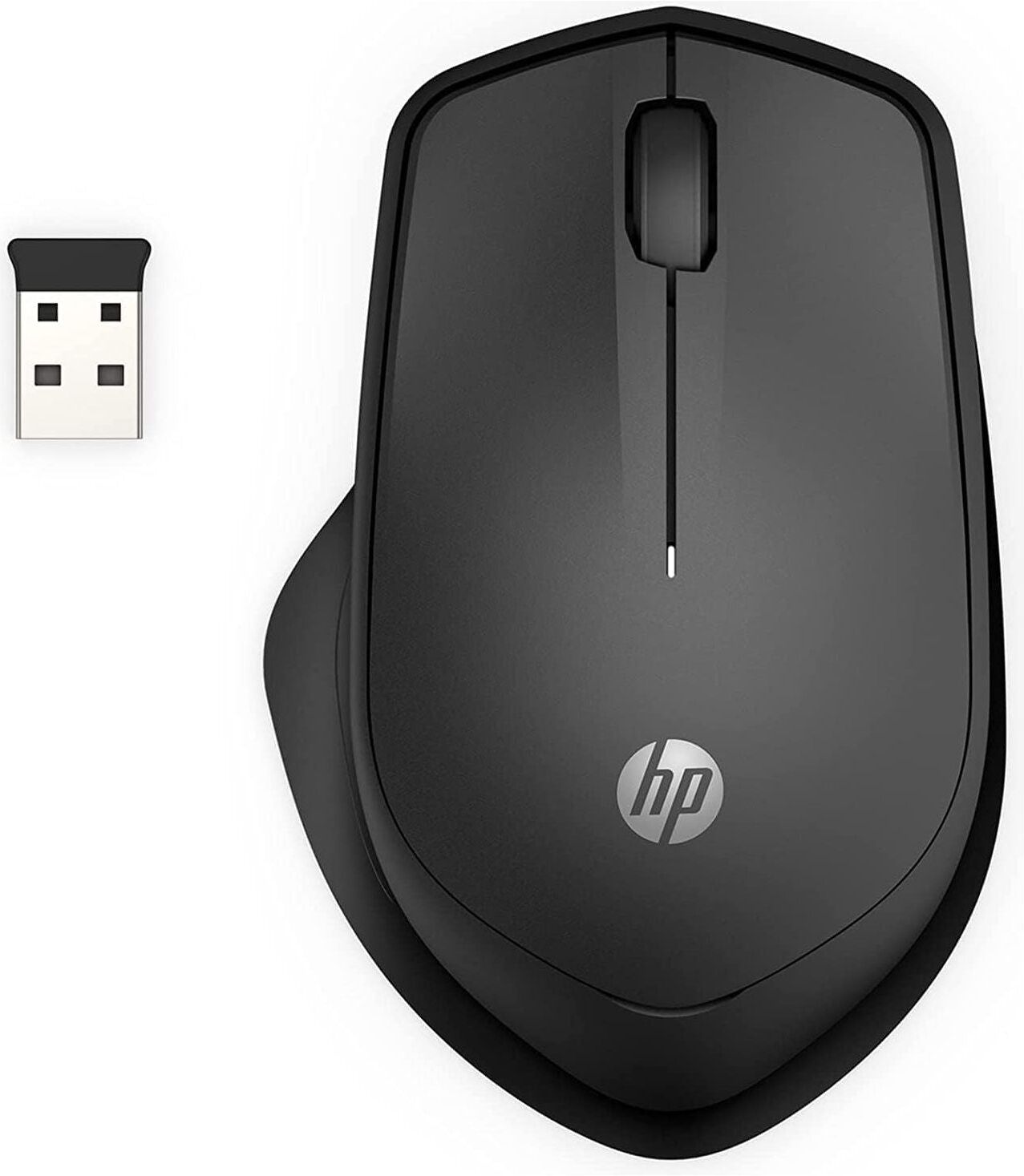
HP 280 Silent Wireless Mouse - Blue Optical Technology, 1600 DPI, Ergonomic Design, USB-A Dongle, Black, NewHP 280 Silent Wireless Mouse - Blue Optical Technology, 1600 DPI, Ergonomic Design, USB-A Dongle, Black Overview The HP 280 Silent Wireless Mouse is designed for a quiet and efficient computing experience, making it ideal for both work and home use. Featuring advanced Blue Optical Technology, it delivers precise tracking on various surfaces with a 1600 DPI sensor for smooth and responsive performance. The ergonomic design ensures comfort during extended use, while the wireless connectivity via a USB-A dongle provides reliable and hassle-free operation. With a silent click mechanism, this mouse reduces noise without compromising functionality, offering a seamless and distraction-free experience. Key Features: Silent click technology for a quieter and more comfortable experience Blue Optical Technology for smooth tracking on different surfaces 1600 DPI sensor for accurate and responsive movement Ergonomic design to support comfortable usage for long hours Reliable wireless connectivity via USB-A dongle Compact and lightweight for easy portability Long battery life for extended usage without frequent replacements Product Description The HP 280 Silent Wireless Mouse offers a superior combination of performance, comfort, and convenience. Equipped with Blue Optical Technology, it provides precise tracking on a variety of surfaces, making it suitable for home, office, and travel use. The 1600 DPI sensor ensures smooth and accurate cursor movement, enhancing productivity and efficiency. Designed with an ergonomic shape, this mouse supports natural hand positioning, reducing strain during prolonged use. The silent click feature minimizes noise, making it perfect for quiet environments such as shared workspaces, libraries, and late-night browsing. Wireless connectivity through the USB-A dongle ensures a stable and interference-free connection, eliminating the hassle of tangled wires. With a sleek black finish and a lightweight build, the HP 280 Silent Wireless Mouse is both stylish and portable. Its energy-efficient design offers long battery life, allowing uninterrupted usage without frequent battery changes. Whether for everyday tasks, professional work, or casual browsing, this mouse delivers a comfortable and silent experience. Silent click technology for noise-free operation Blue Optical Technology for enhanced tracking accuracy 1600 DPI sensor for smooth and responsive movement Ergonomic design for all-day comfort Wireless connectivity with a USB-A dongle for reliable performance Compact, lightweight, and easy to carry Long battery life for extended use Stylish black finish, perfect for home, office, or travel The HP 280 Silent Wireless Mouse is the perfect choice for users looking for a silent, precise, and ergonomic mouse that delivers high performance with minimal noise.14,99 £*Shipping: 0,00 £Secure redirect to the provider
-
What is the difference between serfdom and bondage?
Serfdom and bondage are both forms of unfree labor, but they have different historical and cultural contexts. Serfdom was a system of labor in medieval Europe where peasants were bound to the land and required to work for the lord in exchange for protection and the use of land. Bondage, on the other hand, refers to the condition of being enslaved or held as property, often as a result of being captured in war, being born into slavery, or being sold into slavery. While both serfdom and bondage involve the lack of freedom and autonomy, serfdom was tied to the feudal system in Europe, while bondage has been a more widespread and enduring form of unfree labor throughout history. **
-
What is the difference between manorialism and serfdom?
Manorialism refers to the economic system in medieval Europe where land was divided into manors controlled by a lord, who provided protection and resources in exchange for labor and goods from the peasants. Serfdom, on the other hand, was the legal and social status of the peasants who worked the land on the manor. Serfs were bound to the land and could not leave without the lord's permission, whereas manorialism refers to the overall system of land ownership and labor relationships. In essence, manorialism was the economic system, while serfdom was the social status of the laborers within that system. **
-
Can there be forced labor and serfdom in a democratic state? Justification?
Forced labor and serfdom are generally considered incompatible with the principles of democracy, which prioritize individual freedoms and rights. In a democratic state, citizens are expected to have the right to choose their occupation and work conditions freely. Any form of forced labor or serfdom would violate these fundamental principles and would likely face legal challenges and public outcry. Additionally, international human rights standards and conventions prohibit forced labor and slavery, further reinforcing the incompatibility of these practices with a democratic society. **
-
What were the serfdom conditions in the Ottobeuren Monastery State in the year 1548?
In 1548, the Ottobeuren Monastery State was a feudal society where serfdom conditions were prevalent. Serfs were bound to the land they worked on and were required to provide labor and goods to the monastery in exchange for protection and a place to live. Serfs had limited rights and freedoms, and their lives were heavily controlled by the monastery. They were subject to the authority of the monastery's rulers and had little opportunity for social mobility. **
* All prices are inclusive of VAT and, if applicable, plus shipping costs. The offer information is based on the details provided by the respective shop and is updated through automated processes. Real-time updates do not occur, so deviations can occur in individual cases. ** Note: Parts of this content were created by AI.