Buy siqg.com ?
We are moving the project
siqg.com .
Are you interested in purchasing the domain
siqg.com ?
domain@kv-gmbh.de · 0541-91531010
Buy siqg.com ?
Spider web or mold?
If given the choice between spider web or mold, I would choose spider web. Spider webs are natural creations made by spiders to catch prey, whereas mold is a type of fungus that can be harmful to health if not properly dealt with. Spider webs can also be quite intricate and beautiful to look at, adding a touch of nature to the environment. **
Is spider web the feces of the spider?
No, spider webs are not the feces of the spider. Spider webs are actually made from silk produced by the spider's spinnerets, which are located at the back of the spider's abdomen. The silk is used by the spider to create webs for catching prey, building nests, or for other purposes. Feces, on the other hand, are waste materials produced by the spider's digestive system and are not used in the construction of webs. **
Similar search terms for Corner-Spider-Web
Top-Angebote
Products related to Corner-Spider-Web:
-
Inspired Living Red & Blue Spider Web Shooter Glove Wrist Web Shooter Toy For Superhero Cosplay, Parties & Gift Red & Blue Spider Web Shooter Glove Wrist Web Shooter Toy For Superhero Cosplay, Parties & GiftBring your superhero dreams to life with this exciting Spider web shooter glove that lets you act just like your favorite webslinging hero. Designed for kids and adults alike, this fun and interactive superhero cosplay toy adds action to playtime,...49,97 $*Shipping: 0,00 $Secure redirect to the provider
-
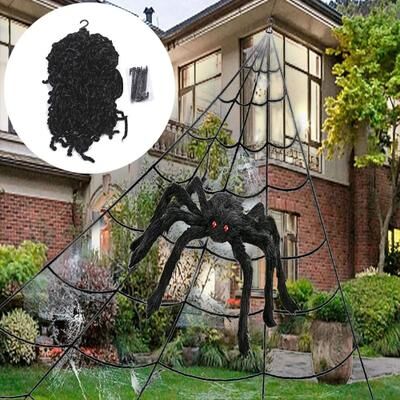
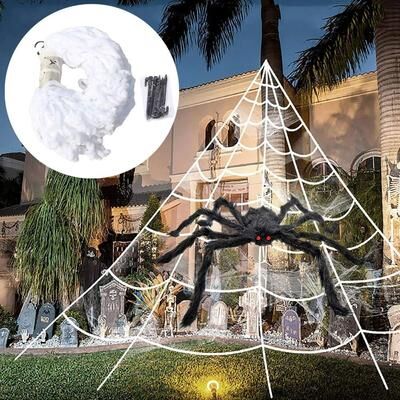
Uplift Essentials Large Plush Triangle Spider Web & Simulation Spider Set whiteTransform your yard into an unforgettable spooky scene with this 5meter large plush triangle spider web set. Spanning an impressive 16.4 feet (5 meters), this oversized triangular web creates a dramatic, creepy backdrop across lawns, porches, and...41,97 $*Shipping: 0,00 $Secure redirect to the provider

-
What is a large house spider or corner spider?
A large house spider, also known as a corner spider, is a common species of spider found in homes and buildings. They are typically brown or gray in color and have long legs, with a body that can reach up to 1 inch in size. These spiders are known for building messy, irregular webs in corners or crevices of rooms where they can catch insects for food. While they may look intimidating due to their size, large house spiders are not considered dangerous to humans and are actually beneficial in controlling insect populations in the home. **
-
Can tarantulas weave a spider web?
No, tarantulas cannot weave a traditional spider web like other species of spiders. They do not have the ability to produce silk from their spinnerets in the same way that other spiders do. Instead, tarantulas use their silk for lining their burrows, creating egg sacs, and sometimes for making trip wires to detect prey. Their silk is not used for constructing intricate webs for catching prey like other spiders. **
-
How long does a spider need to build its spider web?
The time it takes for a spider to build its web can vary depending on the species of spider and the complexity of the web. Some spiders can construct a web in as little as 30 minutes, while others may take several hours. Factors such as the availability of prey and the environmental conditions can also influence the speed at which a spider builds its web. **
-
Which spider is it, the funnel-web or the cobweb spider?
The funnel-web spider and the cobweb spider are two different species of spiders with distinct characteristics. The funnel-web spider is known for its aggressive behavior and potent venom, which can be dangerous to humans. It builds funnel-shaped webs to catch its prey. On the other hand, the cobweb spider is known for its intricate, messy webs and is not considered dangerous to humans. It catches its prey by building a tangle of silk threads. Therefore, it is important to correctly identify which spider it is, as the funnel-web spider poses a greater threat to humans. **

Does the spider not build a web?
Yes, spiders do build webs. Web-building is a common behavior among many species of spiders, and it serves as a way for them to catch prey. The construction of a web involves the spider producing silk from its spinnerets and then using it to create the intricate structure that will ensnare insects. The design and location of the web can vary depending on the species of spider and its environment. **
Is that mold or a spider web?
Without further context or information, it is difficult to determine whether it is mold or a spider web. Mold typically appears as a fuzzy, discolored growth on surfaces, while spider webs are typically thin, delicate, and intricate. If the substance is found in a damp or humid area, it is more likely to be mold. However, if it is found in a corner or high-up area, it may be a spider web. It is best to inspect the area closely and, if unsure, seek the advice of a professional. **
Top-Angebote
Products related to Corner-Spider-Web:
-
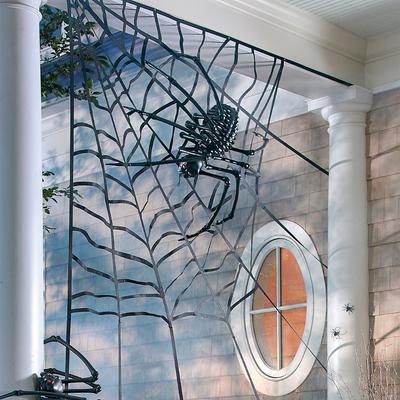
Corner Spider Web - Grandin RoadIdeally suited for use in corners. Heavy-duty, laser-cut polyester felt. Perfect on a porch or indoor stairwell. Detailed design with natural irregularities for authenticity. Display with your own oversized spiders for even more impact. Sturdy...29,00 $*Shipping: 9,95 $Secure redirect to the provider
-
Uplift Essentials Large Plush Triangle Spider Web & Simulation Spider Set blackTransform your yard into an unforgettable spooky scene with this 5meter large plush triangle spider web set. Spanning an impressive 16.4 feet (5 meters), this oversized triangular web creates a dramatic, creepy backdrop across lawns, porches, and...41,97 $*Shipping: 0,00 $Secure redirect to the provider
-
Spider web or mold?
If given the choice between spider web or mold, I would choose spider web. Spider webs are natural creations made by spiders to catch prey, whereas mold is a type of fungus that can be harmful to health if not properly dealt with. Spider webs can also be quite intricate and beautiful to look at, adding a touch of nature to the environment. **
-
Is spider web the feces of the spider?
No, spider webs are not the feces of the spider. Spider webs are actually made from silk produced by the spider's spinnerets, which are located at the back of the spider's abdomen. The silk is used by the spider to create webs for catching prey, building nests, or for other purposes. Feces, on the other hand, are waste materials produced by the spider's digestive system and are not used in the construction of webs. **
-
What is a large house spider or corner spider?
A large house spider, also known as a corner spider, is a common species of spider found in homes and buildings. They are typically brown or gray in color and have long legs, with a body that can reach up to 1 inch in size. These spiders are known for building messy, irregular webs in corners or crevices of rooms where they can catch insects for food. While they may look intimidating due to their size, large house spiders are not considered dangerous to humans and are actually beneficial in controlling insect populations in the home. **
-
Can tarantulas weave a spider web?
No, tarantulas cannot weave a traditional spider web like other species of spiders. They do not have the ability to produce silk from their spinnerets in the same way that other spiders do. Instead, tarantulas use their silk for lining their burrows, creating egg sacs, and sometimes for making trip wires to detect prey. Their silk is not used for constructing intricate webs for catching prey like other spiders. **
Similar search terms for Corner-Spider-Web
-
Inspired Living Red & Blue Spider Web Shooter Glove Wrist Web Shooter Toy For Superhero Cosplay, Parties & Gift Red & Blue Spider Web Shooter Glove Wrist Web Shooter Toy For Superhero Cosplay, Parties & GiftBring your superhero dreams to life with this exciting Spider web shooter glove that lets you act just like your favorite webslinging hero. Designed for kids and adults alike, this fun and interactive superhero cosplay toy adds action to playtime,...49,97 $*Shipping: 0,00 $Secure redirect to the provider
-
Uplift Essentials Large Plush Triangle Spider Web & Simulation Spider Set whiteTransform your yard into an unforgettable spooky scene with this 5meter large plush triangle spider web set. Spanning an impressive 16.4 feet (5 meters), this oversized triangular web creates a dramatic, creepy backdrop across lawns, porches, and...41,97 $*Shipping: 0,00 $Secure redirect to the provider
-
How long does a spider need to build its spider web?
The time it takes for a spider to build its web can vary depending on the species of spider and the complexity of the web. Some spiders can construct a web in as little as 30 minutes, while others may take several hours. Factors such as the availability of prey and the environmental conditions can also influence the speed at which a spider builds its web. **
-
Which spider is it, the funnel-web or the cobweb spider?
The funnel-web spider and the cobweb spider are two different species of spiders with distinct characteristics. The funnel-web spider is known for its aggressive behavior and potent venom, which can be dangerous to humans. It builds funnel-shaped webs to catch its prey. On the other hand, the cobweb spider is known for its intricate, messy webs and is not considered dangerous to humans. It catches its prey by building a tangle of silk threads. Therefore, it is important to correctly identify which spider it is, as the funnel-web spider poses a greater threat to humans. **
-
Does the spider not build a web?
Yes, spiders do build webs. Web-building is a common behavior among many species of spiders, and it serves as a way for them to catch prey. The construction of a web involves the spider producing silk from its spinnerets and then using it to create the intricate structure that will ensnare insects. The design and location of the web can vary depending on the species of spider and its environment. **
-
Is that mold or a spider web?
Without further context or information, it is difficult to determine whether it is mold or a spider web. Mold typically appears as a fuzzy, discolored growth on surfaces, while spider webs are typically thin, delicate, and intricate. If the substance is found in a damp or humid area, it is more likely to be mold. However, if it is found in a corner or high-up area, it may be a spider web. It is best to inspect the area closely and, if unsure, seek the advice of a professional. **
* All prices are inclusive of VAT and, if applicable, plus shipping costs. The offer information is based on the details provided by the respective shop and is updated through automated processes. Real-time updates do not occur, so deviations can occur in individual cases. ** Note: Parts of this content were created by AI.