Buy siqg.com ?
We are moving the project
siqg.com .
Are you interested in purchasing the domain
siqg.com ?
domain@kv-gmbh.de · 0541-91531010
Buy siqg.com ?
What does 'du brunzkache du ogsoachte' mean?
The phrase "du brunzkache du ogsoachte" is in the Bavarian dialect of German and translates to "you're crazy, you're delusional" in English. It is used to express disbelief or to dismiss someone's ideas or actions as irrational or nonsensical. **
Is it said "Du backst" or "Du bäckst"?
The correct form is "Du backst." The verb "backen" means "to bake" in German, and when conjugated for the second person singular (du), it takes the form "backst." The umlaut (ä) in "bäckst" is incorrect in this context. **
Similar search terms for Du
Top-Angebote
Products related to Du:
-
"""Chateau du Trignon""" """Chateau du Trignon Cotes-du-Rhone Rouge 2021 Red Wine - France""""""Exuding a wealth of savory notes, this bold Côtes-du-Rhône red mingles red currant, strawberry and raspberry with hints of spice for a voluptuous wine. Château du Trignon has long been among the Southern Rhône Valley’s most respected wine estates...."20,99 $*Shipping: 0,00 $Secure redirect to the provider
-
"""Chateau du Trignon""" """Chateau du Trignon Cotes du Rhone Roussanne 2023 White Wine - France""""""Swirls of orange blossom and vanilla introduce this richly textured Roussanne. Soft, honeyed flavors of tangerine and pear are broad and expansive on the palate, accented by hints of earth and sunny lemon acidity."""21,97 $*Shipping: 0,00 $Secure redirect to the provider
-
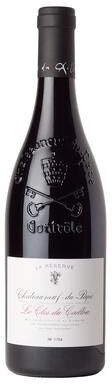
"""Clos du Caillou""" """Clos du Caillou Chateauneuf-du-Pape Reserve 2021 Red Wine - France""""""A brilliant and deep red with cherry reflections. A nose of great complexity, with aromas of red fruit jam mixed with hints of Provence (thyme, rosemary) and notes of fresh cocoa. Elegance, of purity with remarkable balance on the palate. Flavors..."198,99 $*Shipping: 0,00 $Secure redirect to the provider


-
Do you say "Du backst" or "Du bäckst"?
The correct spelling is "Du backst." The verb "backen" is conjugated as "backst" in the second person singular form. The umlaut on the letter "a" is not used in this conjugation. **
-
Does it say "Du hältst" or "Du hältst"?
It says "Du hältst." **
-
Does it say "Du backst" or "Du bäckst"?
It says "Du backst." The verb "backen" (to bake) is conjugated as "backst" in the second person singular form in the present tense. The form "Du bäckst" would be incorrect in standard German. **
-
Why do we say "du hältst" but not "du setzt" instead "du setzt dich"?
In German, the verb "setzen" typically requires a direct object, so when using it in the second person singular form, it is often accompanied by a reflexive pronoun to indicate that the action is being performed on oneself. This is why we say "du setzt dich" instead of just "du setzt." On the other hand, the verb "halten" does not require a direct object, so it can be used on its own without a reflexive pronoun, resulting in "du hältst." This distinction in usage is a characteristic of the German language and its grammar rules. **

What does "Du weißt nicht, was du willst?" mean?
"Du weißt nicht, was du willst?" is a German phrase that translates to "You don't know what you want?" in English. It is often used to express frustration or confusion towards someone who seems indecisive or unsure about their desires or intentions. The phrase can be used in various contexts, such as in relationships, decision-making, or when someone is being wishy-washy about their choices. **
Why is it "du nutzt" and not "du nutzst"?
The verb "nutzen" is an irregular verb in German, and its conjugation in the present tense for the second person singular (du) is "du nutzt" instead of "du nutzst." This irregularity is due to the vowel change in the stem of the verb. In German, some verbs undergo a vowel change in the stem in the present tense conjugation, and "nutzen" is one of those verbs. Therefore, the correct form is "du nutzt" to follow the irregular conjugation pattern of the verb "nutzen." **
Top-Angebote
Products related to Du:
-
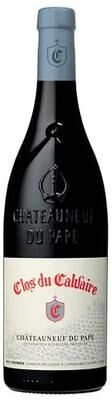
"""Clos du Calvaire""" """Clos du Calvaire Chateauneuf-du-Pape 2023 Red Wine - France""""""This historic cuvée from Clos du Calvaire offers a nose of red fruits, garrigue, and a hint of pepper. The floral and fruity palate with fine, persistent tannins will surely make you want to taste it again. Blend: 80% Grenache, 10% Syrah, 10%..."48,97 $*Shipping: 0,00 $Secure redirect to the provider
-
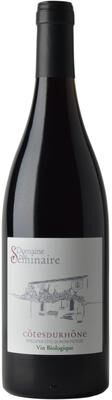
"""Domaine du Seminaire""" """Domaine du Seminaire Cotes du Rhone 2024 Red Wine - France""""""Ruby color with purple highlights, whose aromas are reminiscent of wild berries with licorice notes. Balanced wine on the palate showing roundness and fruit."""21,97 $*Shipping: 0,00 $Secure redirect to the provider
-
"""Chateau du Trignon""" """Chateau du Trignon Cotes-du-Rhone Rouge 2021 Red Wine - France""""""Exuding a wealth of savory notes, this bold Côtes-du-Rhône red mingles red currant, strawberry and raspberry with hints of spice for a voluptuous wine. Château du Trignon has long been among the Southern Rhône Valley’s most respected wine estates...."20,99 $*Shipping: 0,00 $Secure redirect to the provider
-
What does 'du brunzkache du ogsoachte' mean?
The phrase "du brunzkache du ogsoachte" is in the Bavarian dialect of German and translates to "you're crazy, you're delusional" in English. It is used to express disbelief or to dismiss someone's ideas or actions as irrational or nonsensical. **
-
Is it said "Du backst" or "Du bäckst"?
The correct form is "Du backst." The verb "backen" means "to bake" in German, and when conjugated for the second person singular (du), it takes the form "backst." The umlaut (ä) in "bäckst" is incorrect in this context. **
-
Do you say "Du backst" or "Du bäckst"?
The correct spelling is "Du backst." The verb "backen" is conjugated as "backst" in the second person singular form. The umlaut on the letter "a" is not used in this conjugation. **
-
Does it say "Du hältst" or "Du hältst"?
It says "Du hältst." **
Similar search terms for Du
-
"""Chateau du Trignon""" """Chateau du Trignon Cotes du Rhone Roussanne 2023 White Wine - France""""""Swirls of orange blossom and vanilla introduce this richly textured Roussanne. Soft, honeyed flavors of tangerine and pear are broad and expansive on the palate, accented by hints of earth and sunny lemon acidity."""21,97 $*Shipping: 0,00 $Secure redirect to the provider
-
"""Clos du Caillou""" """Clos du Caillou Chateauneuf-du-Pape Reserve 2021 Red Wine - France""""""A brilliant and deep red with cherry reflections. A nose of great complexity, with aromas of red fruit jam mixed with hints of Provence (thyme, rosemary) and notes of fresh cocoa. Elegance, of purity with remarkable balance on the palate. Flavors..."198,99 $*Shipping: 0,00 $Secure redirect to the provider
-
"""Clos du Caillou""" """Clos du Caillou Chateauneuf-du-Pape Reserve 2023 Red Wine - France""""""Aromas of red and black fruits, highly spiced with cocoa nibs, peppers, cedar box. Ripe, with wild strawberry, blackberry; wild herbs such as thyme and rosemary appear on the fresh finish. Pair with grilled steak with pepper; game meats; roast lamb..."190,99 $*Shipping: 0,00 $Secure redirect to the provider
-
"""Chateau du Tertre""" """Chateau du Tertre Les Hauts du Tertre 2023 Red Wine - France""""""Les Hauts du Tertre 2023 is faithful to its style, full of plump fruit and deliciously approachable. This is achieved with a blend of crisp, juicy Merlots and delicate, suave Cabernet Francs. A generous proportion of Petit Verdot brings depth and..."31,97 $*Shipping: 0,00 $Secure redirect to the provider
-
Does it say "Du backst" or "Du bäckst"?
It says "Du backst." The verb "backen" (to bake) is conjugated as "backst" in the second person singular form in the present tense. The form "Du bäckst" would be incorrect in standard German. **
-
Why do we say "du hältst" but not "du setzt" instead "du setzt dich"?
In German, the verb "setzen" typically requires a direct object, so when using it in the second person singular form, it is often accompanied by a reflexive pronoun to indicate that the action is being performed on oneself. This is why we say "du setzt dich" instead of just "du setzt." On the other hand, the verb "halten" does not require a direct object, so it can be used on its own without a reflexive pronoun, resulting in "du hältst." This distinction in usage is a characteristic of the German language and its grammar rules. **
-
What does "Du weißt nicht, was du willst?" mean?
"Du weißt nicht, was du willst?" is a German phrase that translates to "You don't know what you want?" in English. It is often used to express frustration or confusion towards someone who seems indecisive or unsure about their desires or intentions. The phrase can be used in various contexts, such as in relationships, decision-making, or when someone is being wishy-washy about their choices. **
-
Why is it "du nutzt" and not "du nutzst"?
The verb "nutzen" is an irregular verb in German, and its conjugation in the present tense for the second person singular (du) is "du nutzt" instead of "du nutzst." This irregularity is due to the vowel change in the stem of the verb. In German, some verbs undergo a vowel change in the stem in the present tense conjugation, and "nutzen" is one of those verbs. Therefore, the correct form is "du nutzt" to follow the irregular conjugation pattern of the verb "nutzen." **
* All prices are inclusive of VAT and, if applicable, plus shipping costs. The offer information is based on the details provided by the respective shop and is updated through automated processes. Real-time updates do not occur, so deviations can occur in individual cases. ** Note: Parts of this content were created by AI.